Why Operational Excellence Is Defining the Next Era of Private Markets

Introduction — A Structural Shift in Private Markets
Private equity is entering a new phase.
Not because of short-term cycles, interest rates, or geopolitical developments—but because of a deeper structural shift in how value is created.
For much of the past decade, strong returns were supported by favorable conditions: multiple expansion, low-cost leverage, and efficient exit strategies.
That environment has changed.
Recent industry research, including insights from a recent PE report from Bain & Company, points to a clear trend: returns are increasingly driven by operational execution rather than financial engineering.
Longer Holding Periods, Fewer Easy Wins
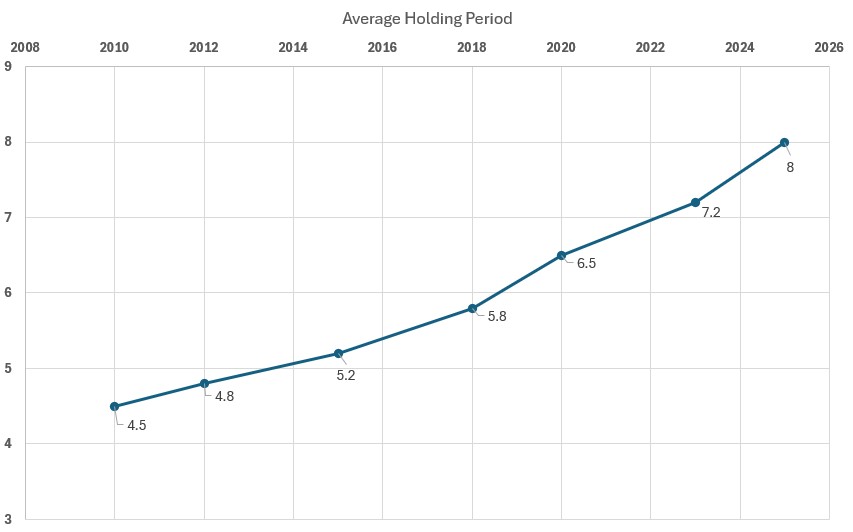
One of the most notable developments is the extension of holding periods. What was once a typical 3–5 year investment horizon is now often significantly longer, giving rise to the idea that 12 is the new 5, meaning today’s deals demand faster EBITDA growth. Estimated annual EBITDA growth needed for 2.5x return over 5 years has risen in a world where low prices, cheap debt, and easy multiple expansion are gone for the foreseeable future. This shift reflects:
- Slower exit environments
- Increased cost of capital
- Greater selectivity from buyers
As a result, value creation must now occur within the business, not around it.
From Financial Engineering to Execution Discipline
Historically, private equity returns were driven by three primary levers:
- Revenue growth
- Margin expansion
- Multiple expansion
Today, the balance has shifted. Multiple expansion is less predictable. Leverage is more constrained.That leaves one consistent and controllable driver:
Operational Excellence.
This includes:
- Pricing discipline
- Cost structure optimization
- Sales effectiveness
- Organizational alignment
- Execution cadence
In this environment, success depends less on timing the market—and more on how effectively a business is run.
What Operational Excellence Actually Means
Operational excellence is often discussed but rarely defined clearly. We view it as a combination of three elements:
1. Clarity
Clear strategic priorities and decision-making frameworks.
2. Discipline
Consistent follow-through, accountability, and measurement.
3. Rhythm
A structured cadence that ensures focus throughout the year.
These elements are embedded in our T1–T4 Operating System, which aligns leadership teams around:
- People and organization (Q1)
- Strategy (Q2)
- Growth and development (Q3)
- Budget and alignment (Q4)
This cadence creates visibility, reinforces accountability, and ensures that execution remains consistent—not reactive.
A More Competitive Era Requires Better Execution
The private equity landscape is becoming increasingly competitive. More capital is chasing fewer high-quality opportunities. At the same time, exit timelines are extending, and value creation windows are widening.
In this environment:
- Strong assets alone are not enough
- Strategy alone is not enough
- Capital alone is not enough
Execution becomes the differentiator.
Firms that can systematically improve performance at the operational level will outperform those that rely on market conditions.
Conclusion — The New Source of Alpha
Private markets have always evolved. What is different today is the source of advantage. In a world where external conditions are less predictable, the focus shifts inward—to what can be controlled.
Operational excellence is no longer optional. It is defining the next era of private equity.
At TZG, this has long been a core principle:
Building better businesses through disciplined execution, structured cadence, and a long-term mindset.
See the full original research document here
We welcome thoughtful conversations and exchange of ideas with founders, operators, and investors.
